 By Elenker Walker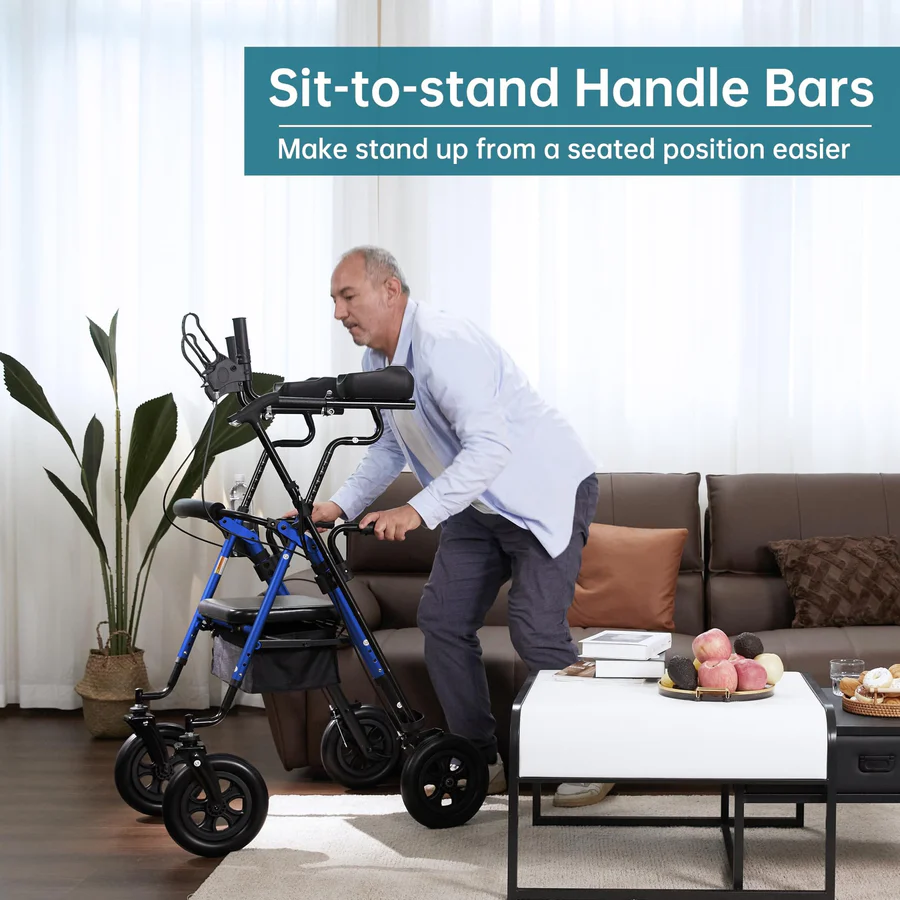
If you’ve ever watched someone hunch over a traditional walker, you probably thought: “That can’t be good for their back.” And you’re not wrong. Traditional walkers can offer stability, sure, but posture? That’s a different story.
Enter upright walkers — a newer kind of mobility aid that looks a little cooler and promises to help people stand taller. But do they really help with posture, or is it all hype?
The Hunch Problem with Traditional Walkers
So here’s the thing about old-school walkers: they’re designed to keep you steady, but they don’t always think about how you’re standing.
Most traditional walkers make you lean forward to grip the handles. Over time, that hunched-over position becomes your “normal.” And if you already have back pain or stiffness, that stoop isn’t doing you any favors.

You might start with decent posture, but after a few weeks or months of leaning forward every time you walk… yeah, your spine starts to pay the price.
And then there’s the hand strain, wrist pressure, and neck tension that comes with it. Not fun.
What Makes Upright Walkers Different?
Upright walkers — sometimes called stand-up walkers or tall walkers — are designed to keep your arms at elbow height, so you’re not bending over just to move.
You walk inside the frame instead of behind it. The handles are typically padded and positioned higher, which means you can stand more naturally. Your shoulders are relaxed, your back is straighter, and your head isn’t jutting forward like a turtle peeking out of its shell.
It might feel weird at first — especially if you’ve been using a standard walker for years. But most people say they feel taller, more confident, and more comfortable once they get used to it.

Okay, So Does It Actually Help Your Posture?
Short answer? Yeah, for most people, upright walkers do help improve posture — at least compared to the old-school ones.
Here’s why:
- You’re not leaning forward anymore. That constant bend at the waist? Gone.
- Your shoulders sit back naturally, rather than rounding forward.
- Your eyes are forward, not staring at the ground (so you’re less likely to trip, too).
- Your weight is better distributed, which can ease joint pain in your lower back, knees, and hips.
Of course, posture isn’t just about looking good. It helps with balance, breathing, circulation, and even energy levels. When your body’s aligned, everything works smoother.
Who Might Benefit the Most?
Upright walkers aren’t just for people trying to look less hunched — they’re especially helpful for:
- Folks with chronic back or neck pain
- Seniors who are tired of looking down all the time
- Anyone recovering from surgery who wants to stay upright and mobile
- People with balance problems who still want a bit of freedom
Even if you’re not in pain now, an upright walker might be worth it for the long-term perks. Think of it like a gentle reminder to stay tall and proud, instead of slowly folding into a question mark.
Are There Any Downsides?
Now, before we all run out and toss the traditional walkers into the recycling bin, it’s fair to talk about a few trade-offs.
They’re bulkier.
Upright walkers can be wider or a bit heavier than the standard kind. Not a huge deal, but it matters if you’ve got tight doorways or a small trunk.
They cost more.
Not gonna sugarcoat it — they’re usually pricier than traditional walkers. But if posture matters to you (or your back’s been screaming for years), it might be a smart investment.
Takes a bit of practice.
The first few times using one can feel awkward. You’re not used to walking tall — which says something about how most devices have made people stoop for decades.
But once you get your stride, most folks say it’s a huge relief.
What About Stability?
Good question. Some people worry that standing more upright means less stability.
But here’s the truth: Upright walkers can be just as stable — if not more — than traditional ones, depending on the design.
Look for:
- Wide, solid wheels (especially if you’re going outside)
- Brakes on the handles (easy to stop if you feel unsteady)
- A sturdy frame that doesn’t wiggle or tip easily
Some upright walker even come with a seat, so if you get tired mid-walk, you can take a break. Handy, right?

Is It Worth Switching?
If posture is important to you — or if you’ve had enough of backaches and neck tension — an upright walker is definitely worth considering.
It helps you:
- Stand taller
- Walk more naturally
- Feel more confident
- Relieve pressure on your back and joints
Plus, it’s kind of nice to see the world at eye level again instead of always looking at your feet.
That said, it’s not for everyone. If you’re super petite, really tall, or have specific balance issues, you’ll want to test one before committing. And yes, budget matters — but so does feeling good in your body.
A Quick Tip Before You Buy
If you’re thinking of making the switch, do this first:
Measure your elbow height while standing upright. Then make sure the walker’s handles adjust to match.
If the handles are too low — you’ll still hunch. If they’re too high — your shoulders will shrug up and cause tension. Get that height right, and everything else gets easier.
Walking tall shouldn’t be a luxury.
Mobility aids should support your body the way it wants to move — not force it into awkward shapes just to stay upright.
So, are upright walkers better for posture than traditional ones? For most folks, yes. They help you stand straighter, feel stronger, and walk with a little more pride.
And honestly? That’s something we could all use a bit more of.